Total solar eclipse, July 22, 2028
Greatest eclipse: July 22, 2028 at 02:55 UTC, near 15.6° S, 126.7° E.
Time in UTC
Saturday, July 22, 02:55
Time remaining
659 d 19 h 26 min
Calculated with Astronomy Engine, an open-source library verified against the US Naval Observatory and NASA JPL. How we calculate
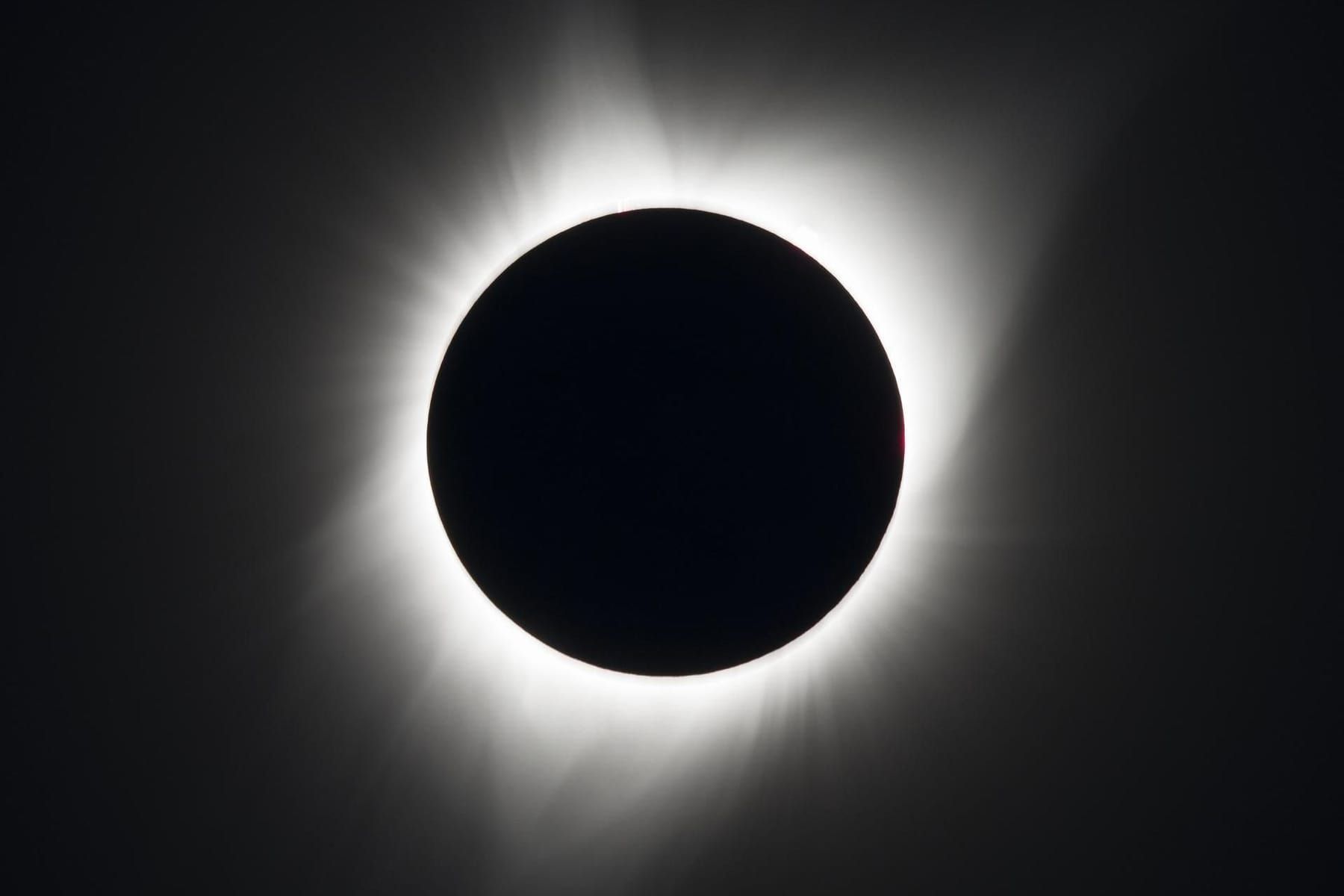
In a total solar eclipse the Moon covers the whole Sun. Inside a narrow path the sky darkens to deep twilight, bright planets and stars appear and the Sun’s corona shines around the black Moon. A much larger region on both sides of the path sees a partial eclipse.
Where the eclipse can be seen
The shading shows how much of the Sun the Moon covers at its maximum at each place. The dark band is the approximate path of totality. Calculated on a one-degree grid; use the table and the calculator for exact times.
At your location
This eclipse cannot be seen from New York.
Local times (America/New York).
Local times in cities
Cities from our list where at least part of the eclipse can be seen, sorted by how much of the Sun is covered.
| City | Sun covered | Begins | Maximum | Ends |
|---|---|---|---|---|
| Sydney | 100 %Totality 3 min 52 s | 12:41 PM | 2:01 PM | 3:15 PM |
Not visible from the other 78 cities in our list.
More events
- Annular solar eclipse, February 6, 2027
- Penumbral lunar eclipse, February 20, 2027
- Penumbral lunar eclipse, July 18, 2027
- Total solar eclipse, August 2, 2027
- Penumbral lunar eclipse, August 17, 2027
- Partial lunar eclipse, January 12, 2028
- Annular solar eclipse, January 26, 2028
- Partial lunar eclipse, July 6, 2028
- Total lunar eclipse, December 31, 2028
- Clocks go back in Europe 2026
- Daylight saving time ends in the US 2026
- December solstice 2026
- Perihelion 2027
- Daylight saving time starts in the US 2027
- March equinox 2027