Perihelion 2027
The Earth is closest to the Sun on January 3, 2027 at 02:33 UTC, at a distance of 147,104,000 km.
Time in UTC
Sunday, January 3, 02:33
Time remaining
93 d 19 h 56 min
Calculated with Astronomy Engine, an open-source library verified against the US Naval Observatory and NASA JPL. How we calculate
Distance to the Sun
147,104,000 km
0.98333 astronomical units
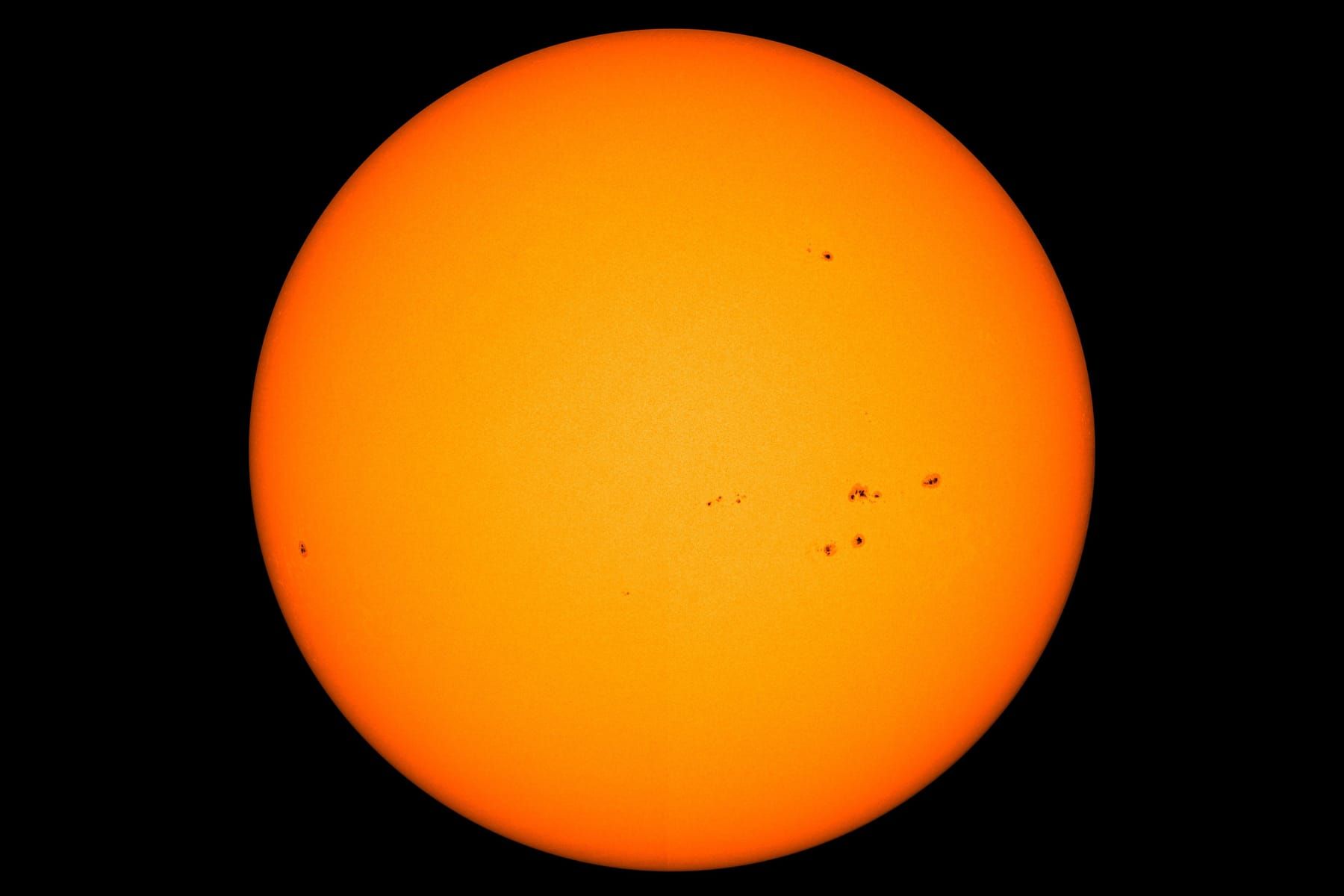
Size of the Sun in the sky
3.4 % larger than at aphelion
Strength of sunlight
6.9 % stronger than at aphelion
The Earth’s orbit is a slightly stretched ellipse, so its distance from the Sun changes by about 5 million kilometres through the year. The closest point, perihelion, always falls in early January, in the middle of the northern winter.
The seasons are caused by the tilt of the Earth’s axis, not by the distance: the tilt changes how high the Sun climbs and how long the days are, which matters far more than the 3 % difference in distance. The distance does have one visible effect: the Earth moves fastest near perihelion, so the northern winter half of the year is about four days shorter than the summer half.
Other point of the orbit: Aphelion 2027