Why days are longer in summer (and what the midnight sun is)
How the 23.4° tilt of Earth's axis makes summer days long and winter days short, how much that depends on where you live, and why the poles get months of midnight sun and polar night.
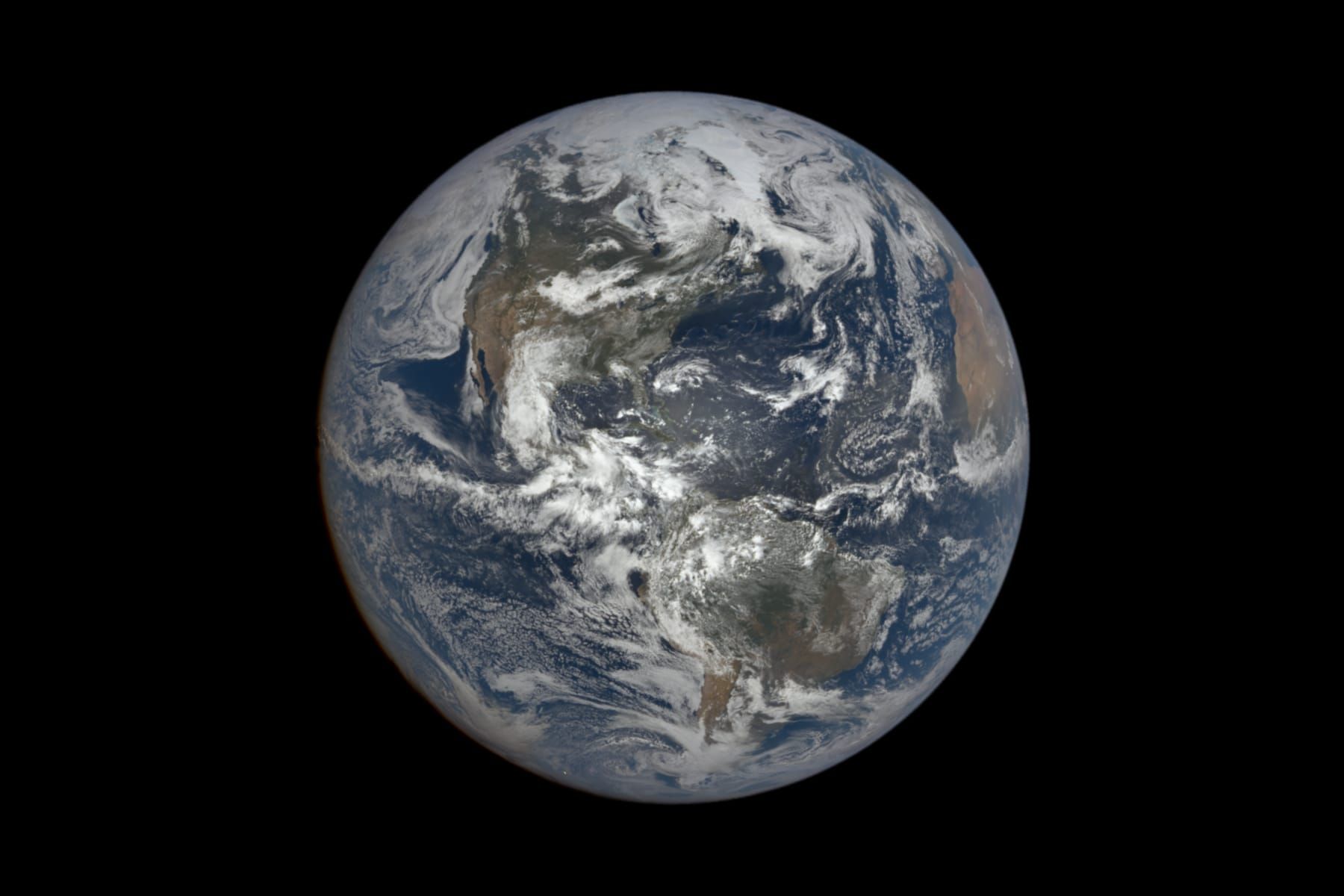
On the longest day of the year, London gets almost 16 hours and 40 minutes of daylight; on the shortest, less than 8 hours. Near the equator, the difference is only a few minutes. The reason is a simple piece of geometry: Earth’s axis is tilted.
The tilt, not the distance
Earth’s axis is tilted by about 23.4° relative to its orbit, and it keeps pointing in the same direction in space (towards Polaris) all year. As Earth goes around the sun:
- in June the Northern Hemisphere leans towards the sun,
- in December it leans away from it.
The distance to the sun changes much less than people think: about 3% over the year, and Earth is actually closest in early January, in the middle of the northern winter. The tilt matters far more, in two ways.
Why tilt makes days longer
Imagine following one latitude circle, say 50° N, as Earth turns. The line between day and night (the terminator) cuts that circle into a daytime part and a night-time part. In June, because the north leans towards the sun, the terminator is tilted so that more than half of the circle is in daylight: about two-thirds at 50° N, which is about 16 hours. In December it is the opposite, and only about a third is in daylight.
At the equator the terminator always cuts the circle in half, so days stay close to 12 hours all year. Towards the poles, the effect grows, until whole latitude circles are entirely in daylight or entirely in darkness.
| Coordinates | June solstice | March equinox | December solstice |
|---|---|---|---|
| 0° N | 12 h 7 min | 12 h 7 min | 12 h 8 min |
| 20° N | 13 h 21 min | 12 h 7 min | 10 h 55 min |
| 40° N | 15 h 1 min | 12 h 8 min | 9 h 20 min |
| 50° N | 16 h 22 min | 12 h 10 min | 8 h 4 min |
| 60° N | 18 h 52 min | 12 h 13 min | 5 h 52 min |
| 66.6° N | all day | 12 h 16 min | 2 h 7 min |
| 70° N | all day | 12 h 18 min | none |
Why summer is also warmer
The tilt also changes the angle of the sunlight. In summer the sun is higher in the sky, so each square metre of ground receives more energy, and the light passes through less atmosphere. Longer days and more direct sunlight together make summer warm. That the warmest weeks come in July and August, rather than on the solstice, is because land and especially oceans take weeks to heat up.
Midnight sun and polar night
The Arctic Circle lies at about 66.6° N (90° − 23.4°). North of it, the sun stays above the horizon for 24 hours on at least one day around the June solstice: the midnight sun. On at least one day around the December solstice it does not rise at all: the polar night.
- At the Arctic Circle itself, this lasts about a day or two (a bit longer for the midnight sun, because refraction lifts the sun).
- At Tromsø (69.6° N) the midnight sun lasts from about 20 May to 22 July, and the polar night from late November to mid-January.
- At the North Pole the sun rises once a year, around the March equinox, and sets once, around the September equinox.
Polar night is rarely completely dark: at midday the sun is only a few degrees below the horizon, so there are hours of twilight.
How fast day length changes
Day length does not change evenly. It changes fastest around the equinoxes and slowest around the solstices. At 46° N (for example Ljubljana), days grow by about 3 minutes per day in late March and by only a few seconds per day in mid-June.
The day length calculator draws this curve for any place, and lets you compare two places, for example your home town and a city far to the north or south.
Frequently asked questions
Are summer days longer because Earth is closer to the sun?
No. Earth is actually closest to the sun in early January, during the Northern Hemisphere's winter. Seasons and day length are caused by the tilt of Earth's axis.
Where are days the same length all year?
At the equator, days are about 12 hours and 7 minutes long throughout the year. The extra few minutes come from atmospheric refraction and the size of the sun's disc.
What is the midnight sun?
North of the Arctic Circle (about 66.6° N) and south of the Antarctic Circle, the sun does not set at all for at least one day around the summer solstice. The further towards the pole, the longer this lasts, up to about six months at the poles themselves.
How fast do days get longer in spring?
Fastest around the equinoxes. At 50° N days lengthen by about four minutes per day in late March; at 60° N by about six minutes. Around the solstices the change slows to a few seconds per day.