What is golden hour and blue hour?
When the warm light of golden hour and the deep blue of blue hour happen, why they look the way they do, and how long they last where you live.
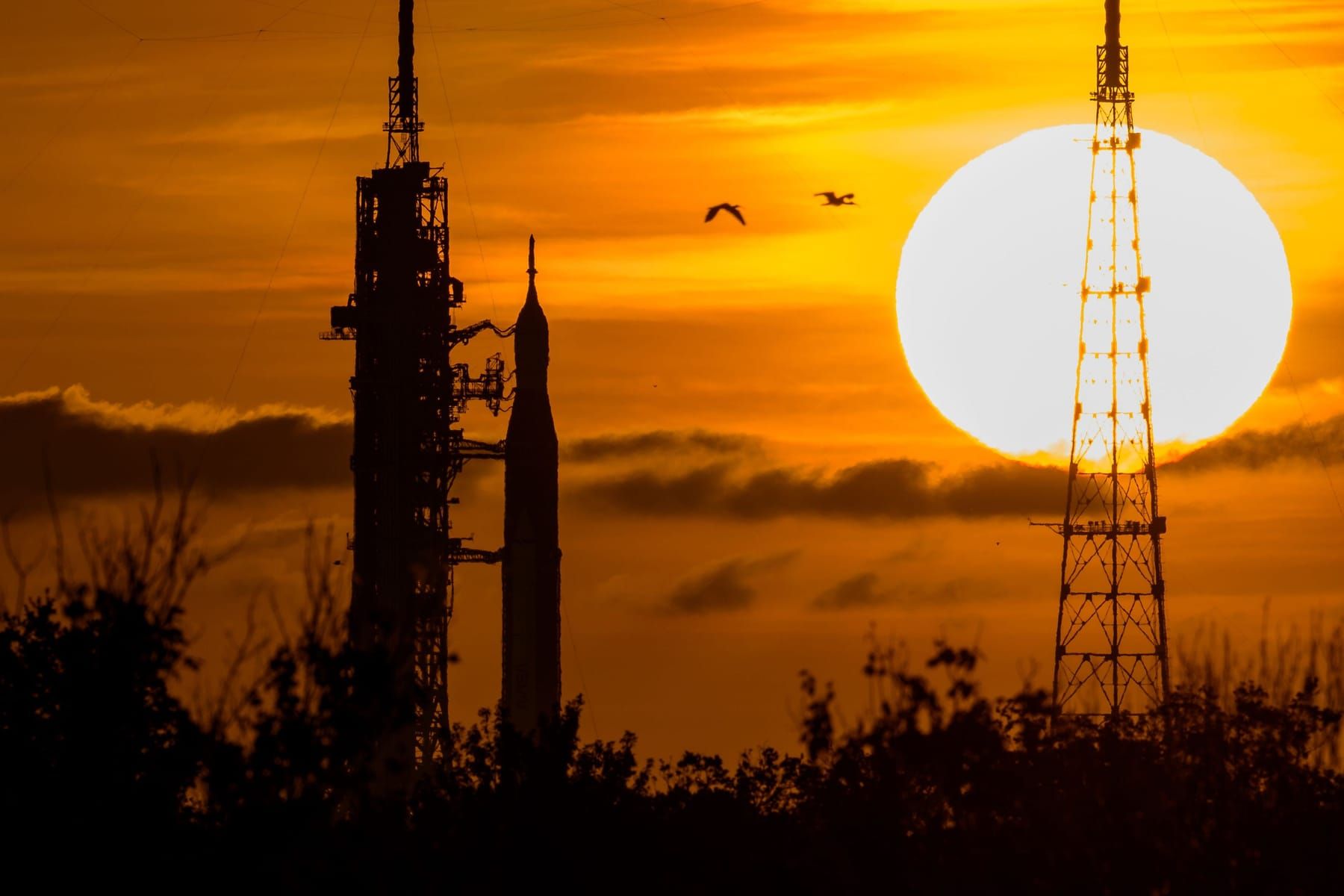
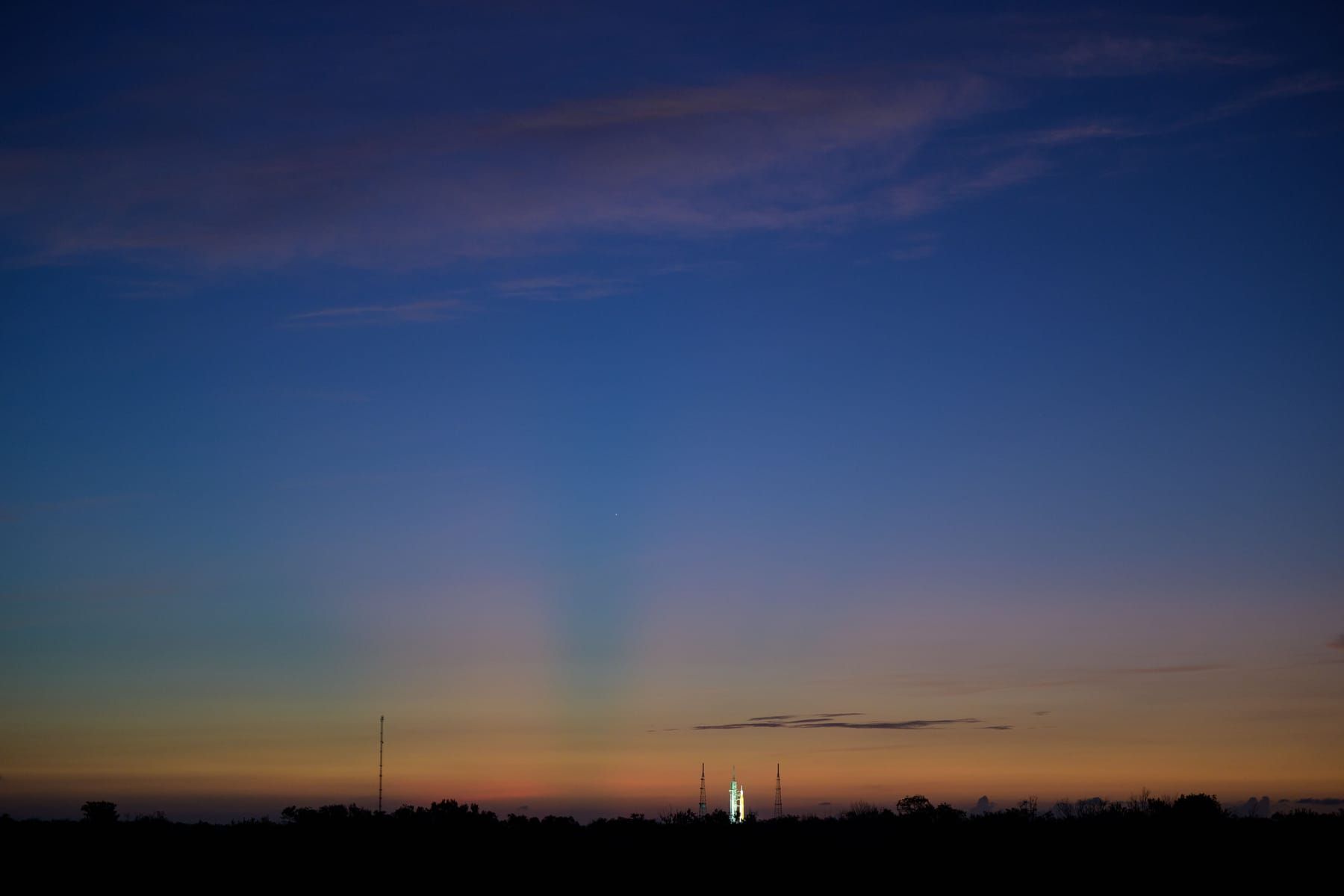
Golden hour is the part of the day when the sun is low in the sky and its light turns warm, soft and directional. Blue hour is the calm, deep-blue twilight that comes right after sunset (or right before sunrise), when the sun has dropped just below the horizon. Both are favourites of photographers, but anyone who enjoys a beautiful evening walk knows them well.
Why the light turns golden
Sunlight contains all colours. On its way through the atmosphere, blue light is scattered much more strongly than red light (this is called Rayleigh scattering, and it is also why the daytime sky is blue). When the sun is high, its light crosses a relatively thin layer of air. When it is low, the light travels through many times more atmosphere: near the horizon the path is roughly 38 times longer than when the sun is straight overhead.
Along that long path most of the blue is scattered away, so the light that reaches you is richer in yellow, orange and red. At the same time the light comes in almost horizontally, which gives long shadows, strong texture and a soft glow on faces and buildings.
Why blue hour is blue
After sunset the sun no longer lights the ground directly, but it still lights the upper atmosphere. That scattered light is dominated by blue. There is a second effect too: ozone high in the atmosphere absorbs some orange and red light, and this matters most when sunlight travels a very long, grazing path through the upper atmosphere. The result is the characteristic even, saturated blue that makes city lights glow and water reflect the sky.
How long golden hour lasts
Because golden and blue hour are defined by the sun’s angle, their length depends on how steeply the sun rises and sets. That depends on your latitude and the time of year:
- Near the equator the sun rises and sets almost vertically. It crosses the 10° golden band quickly, so evening golden hour lasts only about 40 minutes.
- At mid-latitudes (most of Europe and the United States) the sun sets at an angle, and golden hour usually lasts about an hour, a little longer in winter and in midsummer.
- At high latitudes in summer the sun skims along the horizon. In Oslo in June, evening golden hour lasts well over two hours; in Reykjavik it merges straight into the morning golden hour.
Blue hour follows the same logic: at mid-latitudes it usually lasts about 10 to 20 minutes, much longer in the far north.
| Date | Morning golden hour | Evening golden hour | Evening blue hour |
|---|---|---|---|
| Mar 20, 2026 | 05:47–06:45 | 17:35–18:33 | 18:33–18:44 |
| Jun 21, 2026 | 04:48–05:57 | 20:10–21:20 | 21:20–21:35 |
| Sep 23, 2026 | 06:32–07:29 | 18:19–19:16 | 19:16–19:28 |
| Dec 21, 2026 | 07:20–08:31 | 15:29–16:41 | 16:41–16:54 |
Morning or evening?
The geometry is the same in the morning and the evening, but the atmosphere often is not. Morning air is usually calmer and cleaner, with less dust and haze, and sometimes with mist over water and fields. Evening air often carries more particles after a warm day, which can make sunsets more fiery. Many landscape photographers prefer mornings for clarity and quiet, and evenings for colour.
How to plan for golden hour
- Check the times for the exact place. Golden hour shifts by a few minutes every day and differs between cities in the same time zone. The golden hour calculator gives you the times for any place and date, plus a seven-day plan and a calendar file.
- Check the direction of the light. Around sunset the sun sits in the west-north-west in summer and the south-west in winter (in the Northern Hemisphere). The calculator shows the exact direction, so you know which side of a building or mountain will be lit.
- Look at the horizon. Times assume a flat, open horizon. Hills, mountains or tall buildings make the sun disappear earlier, so golden hour ends sooner than the calculated time. In a valley, plan for that.
- Arrive early and stay late. The best light often comes in the last minutes before the sun touches the horizon, and the colours in the sky can peak ten minutes after sunset, during the transition into blue hour.
Different definitions
There is no official definition of golden hour. Some apps use “the first and last hour of sunlight”, some use a band from 6° above to 0° (sunset), and some go down to −4° or −6°. That is why times from different sources can differ by 15 to 20 minutes. Heliotempo uses +6° to −4° for golden hour and −4° to −6° for blue hour, which matches what most photographers experience and keeps the two phases next to each other without a gap.
Frequently asked questions
When exactly is golden hour?
Golden hour is the time when the sun is between about 6° above the horizon and 4° below it. In the evening it starts roughly 40 to 60 minutes before sunset and ends 15 to 25 minutes after it at mid-latitudes; in the morning the order is reversed.
Is golden hour really one hour long?
Not usually. Near the equator it lasts only about 40 minutes, because the sun rises and sets steeply. At high latitudes in summer it can last several hours, and near the poles there are days when it lasts all afternoon.
What is the difference between golden hour and blue hour?
During golden hour the sun is low but mostly still visible, so direct warm light dominates. During blue hour the sun is 4° to 6° below the horizon, so only scattered skylight remains, which is strongly blue.
Does the weather affect golden hour?
The timing depends only on the sun's position, so it is the same in any weather. How it looks depends a lot on the weather. Thin high clouds and clean air often give the most colourful light; a thick overcast sky can hide it completely.