Civil, nautical and astronomical twilight explained
The three stages of twilight, what you can see in each of them, how long they last at different latitudes, and why summer nights in the north never get fully dark.
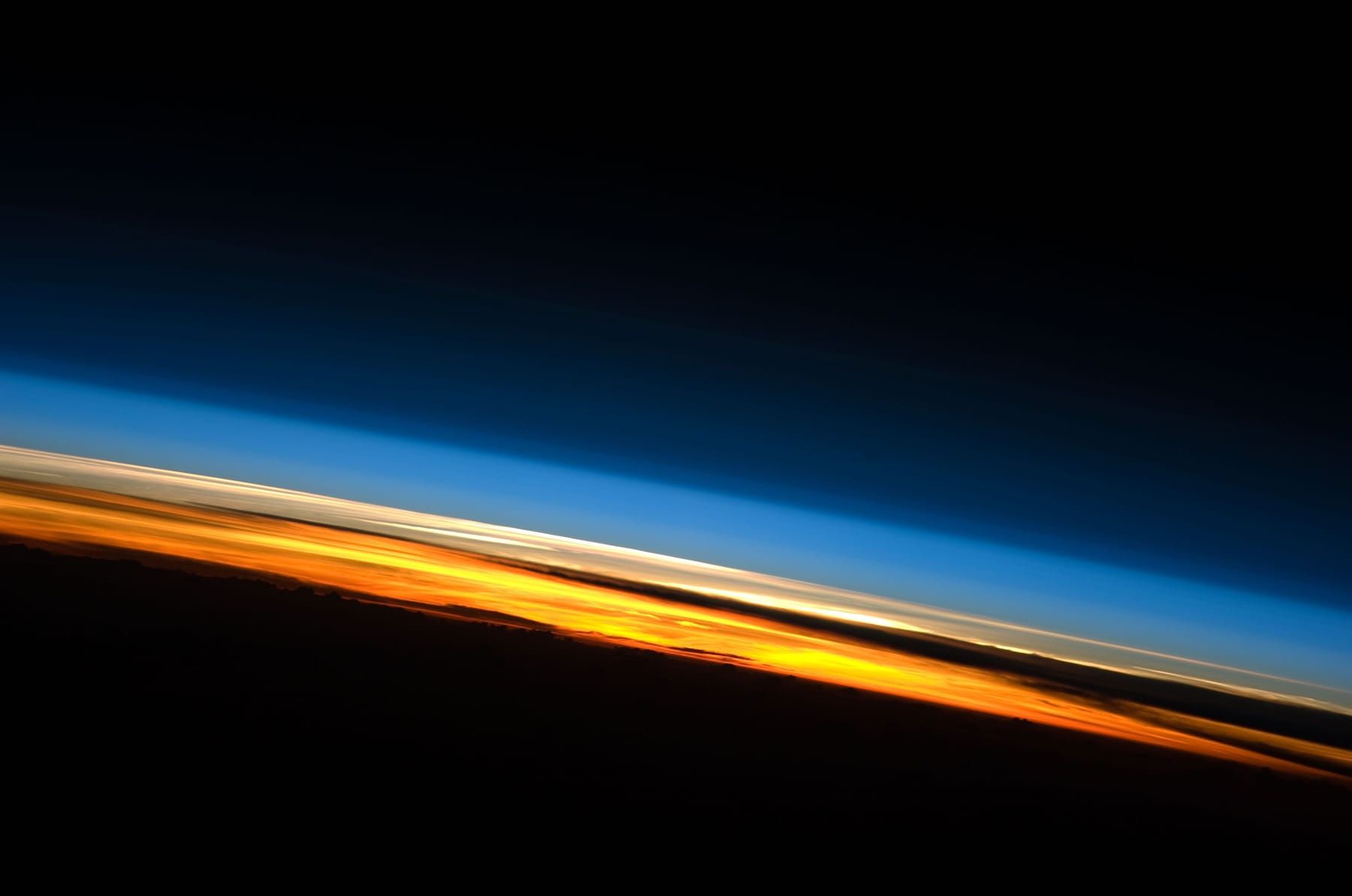
When the sun sets, the sky does not turn dark at once. Sunlight keeps reaching the upper atmosphere and is scattered down towards you, so the sky fades slowly from bright to dark. That in-between time is twilight. Astronomers and navigators divide it into three stages, each defined by how far the centre of the sun is below the horizon.
Civil twilight: 0° to 6° below the horizon
Civil twilight begins at sunset and ends when the sun is 6° below the horizon (civil dusk). In the morning it runs the other way, from civil dawn to sunrise. There is still enough light for most outdoor activities without artificial lighting, the horizon is sharp, and only the brightest planets and stars are visible.
Civil twilight has practical uses. In many countries, rules for vehicle lights and some aviation rules refer to it. For photographers, the second half of civil twilight is blue hour (the sun between 4° and 6° below the horizon).
Nautical twilight: 6° to 12° below
During nautical twilight the sky is noticeably dark, but the horizon at sea is still visible. That is where the name comes from: sailors could measure the height of bright stars above a visible horizon to find their position. On land, you usually need lights to read or walk safely, and most stars that are visible to the naked eye appear.
Astronomical twilight: 12° to 18° below
For most people the sky already looks dark during astronomical twilight. But a faint glow remains, strongest on the side where the sun set, and it washes out faint objects such as distant galaxies and the zodiacal light. Only when the sun is more than 18° below the horizon does astronomical night begin and the sky reach its full darkness (apart from light pollution and the moon).
How long twilight lasts
The length of each stage depends on how steeply the sun’s path crosses the horizon:
- Near the equator the sun goes down almost vertically, so each 6° stage takes only about 20 to 25 minutes. From sunset to full darkness takes only about an hour and a quarter.
- At mid-latitudes the path is slanted, so each stage lasts about 30 to 40 minutes, and the whole twilight from sunset to full night can take close to two hours, even longer in summer.
- Towards the poles the sun can skim along below the horizon for hours, and in summer twilight may never end.
Twilight is shortest around the equinoxes and longest near the solstices, most of all at the June solstice in the Northern Hemisphere.
| Date | Civil dawn | Sunrise | Solar noon | Sunset | Day length |
|---|---|---|---|---|---|
| Mar 20, 2026 | 05:30 | 06:03 | 12:08 | 18:14 | 12 h 10 min |
| Jun 21, 2026 | 03:55 | 04:43 | 13:02 | 21:22 | 16 h 38 min |
| Sep 23, 2026 | 06:15 | 06:48 | 12:53 | 18:57 | 12 h 9 min |
| Dec 21, 2026 | 07:23 | 08:04 | 11:59 | 15:53 | 7 h 50 min |
White nights and missing darkness
Around the June solstice the sun sinks only a little way below the northern horizon at midnight. How far it gets depends on latitude:
- North of about 48.5° (for example Paris, London, Amsterdam, Vancouver) the sun never gets 18° below the horizon for several weeks, so there is no astronomical night. The sky stays faintly light at midnight in the north.
- North of about 54.5° (Edinburgh, Copenhagen; Hamburg is just south of this line) there is no nautical night around the solstice either.
- North of about 60.5° civil twilight lasts all night. Cities just south of that line, such as Oslo, Helsinki and St Petersburg, get only a short spell of nautical twilight around midnight. These light nights are the famous white nights.
- North of the Arctic Circle (about 66.6°) the sun does not set at all for part of the summer: the midnight sun.
The same happens in the Southern Hemisphere around the December solstice, but very few people live at such southern latitudes.
Where to find the times
The sunrise and sunset calculator lists civil, nautical and astronomical dawn and dusk for any place and date, and the day length chart shows all three stages across the whole year, so you can see at a glance when true darkness disappears in summer.
Frequently asked questions
What is the difference between dusk and twilight?
Twilight is the whole period between sunset and full darkness (or between darkness and sunrise). Dusk is the moment when a twilight stage ends in the evening. Civil dusk, for example, is the moment the sun reaches 6° below the horizon.
How long is civil twilight?
Near the equator about 20 to 25 minutes. At mid-latitudes about 30 to 40 minutes, a bit longer in summer and winter than around the equinoxes. In the far north in summer it can last all night.
When is it completely dark?
After astronomical dusk, when the sun is more than 18° below the horizon. From then on the sun no longer brightens the sky at all, which matters for astronomers and for seeing faint stars and the Milky Way.
Why doesn't it get dark in summer in the north?
North of about 48.5° latitude the sun does not sink 18° below the horizon around the June solstice, so astronomical night never begins. North of about 54.5° there is no nautical night either, and north of about 60.5° civil twilight lasts all night, which is known as white nights.